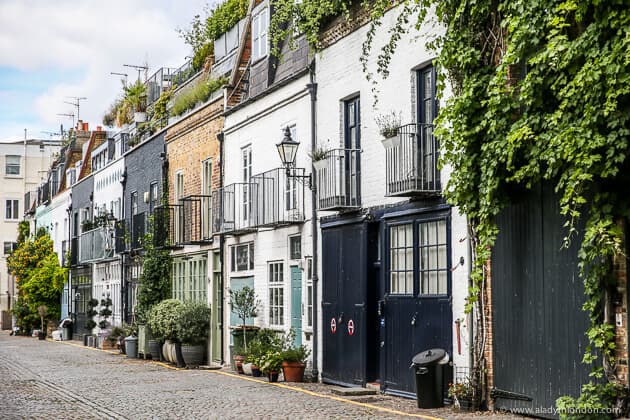
Behind London's Grand Façades
Tucked behind some of London’s grandest streets, mews houses feel like one of the city’s best-kept secrets. Their cobbled lanes, colourful façades and climbing greenery are quietly picturesque, but they began as something far more practical.
From Service Lanes to Prime London Living
The word mews comes from the French muer, meaning “to moult”. It was originally associated with the royal hawks kept at the King’s Mews in Charing Cross. When the site was later rebuilt as stables, the name remained and gradually took on its modern meaning.
During London’s expansion in the 18th and 19th centuries, mews were built behind elegant townhouses to accommodate the horses, carriages and staff belonging to wealthy families. The ground floor generally contained stables and coach houses, with haylofts or modest accommodation for grooms above. Hidden behind the main residences, these lanes formed the working side of fashionable London life.
As motorcars replaced horse-drawn carriages in the early 20th century, the buildings slowly lost their original purpose. Many became garages, workshops or studios before being converted into private homes. Historic England describes this transformation as a reflection of the mews house’s rise from functional stable building to prime London property.
Today, mews are among the addresses I find most charming. Their low-rise architecture and secluded position create a sense of calm that feels unexpected in central London. Original stable doors, arches and cobbles often remain, preserving traces of their earlier life.
Beautiful examples can still be found around Kensington, Chelsea, Notting Hill and Mayfair: small pockets of London where history blends in with everyday London life.
